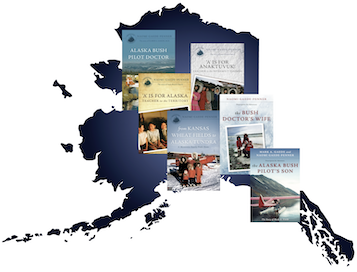

Below are some books I've enjoyed reading:
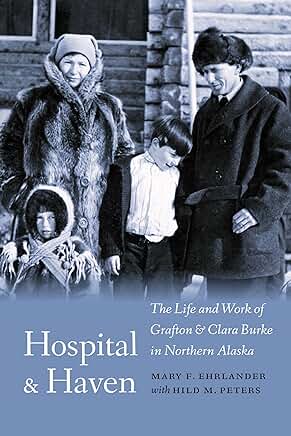
Hospital & Haven: The Life and Work of Grafton & Clara Burke in Northern Alaska
By Mary F. Erhlander and Hild M. Peters
I just reviewed this book for the Alaska Historical Society Journal. It was a compelling and powerful read. For one thing, it takes place in northern Interior Alaska, the region my physician father was responsible for when he was stationed at the Tanana Public Health Sercives Hospital, and where I have fond memories from two years in grade school. Also, I currently have friends in Allakaket where Clara Burke first set foot in Alaska. And then, I know one of the authors, Hild Peters, from when we both got stuck in Kodiak at the conclusion of an Alaska Historical Society Conference. The book is 360 pages, but don't let that alarm you. Eighty-eight of those pages are documentation from the extensive research the authors turned into story-form.
Denali's Howl: The Deadliest Climbing Disaster on America's Wildest Peak
By Andy Hall
Ever since my son summited all 58 of Colorado's 14ners (mountains over 14,000 feet), and I climbed two, I've been intrigued by mountain climbing successes and disasters. When I was in Denali National Park last summer (2022), I picked up this book. I couldn't put it down.
"In 1967, twelve young men attempted to climb Alaska's Mount McKinley, one of the most popular and deadly mountaineering destinations in the world. Only five survived... At an elevation of nearly 20,000 feet, these young men endured an 'arctic super blizzard,' with howling winds of up to 300 miles an hour and wind chill that freezes flesh solid in minutes. All this without the high-tech gear and equipment climbers use today."
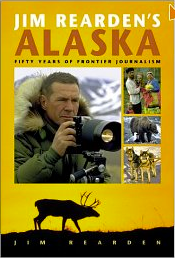
Jim Rearden's Alaska: Fifty Years of Frontier Adventure
By Jim Rearden
Jim Rearden is an incredible writer. His word choices, descriptions, years in Alaska, and respect and love for the people and history of Alaska show through in his captivating stories. His style reads like a friend sitting down with a cup of coffee and starting a conversation with, "You know, I was talking to ol' Knut the other day and he told me about when..." Unlike his other books, this one has chapters of individual true-life stories, often excerpts from his published articles in Outdoor Life, Alaska magazine, Alaska Sportsman, and other publications.
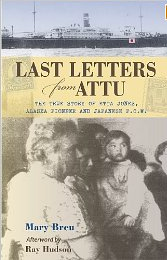
Last Letters from Attu: The True Story of Etta Jones, Alaska Pioneer and Japanese POW
By Mary Breu
What isn't known until the book is opened is that Etta was a pioneer school teacher in Tanana, Old Harbor, Kipnuk, and Attu (starting in 1922.) I was particularly fascinated by her time in Tanana, since our family was there in 1957. Later, when she taught at Kipnuk, with the Yupik Eskimos, her observations and teaching challenges in 1932 were remarkably similar to Anna Bortel's ('A' is for Anaktuvuk : Teacher to the Nunamiut Eskimos) in 1960. Her story doesn't end with those adventures, but takes an unbelievable turn when she becomes a P.O.W.

More than Petticoats: Remarkable Alaska Women
By Cherry Lyon Jones
There are more than 33 states represented in the "More than Petticoats" series. Of course I was interested in Alaska Women, and more so since I'd just eaten the best hamburger at Seward's Alaska Nellie's Roadhouse. After reading the book, I found author Cherry Lyon Jones on-line and sent her an email. Our friendship sprouted. In 2012, we shared dinner at Land's End restaurant in Homer, Alaska. In 2013, she invited me to stay at her house during the Kachemak Bay Writers' Conference in Homer. Her book was an inspiring read for myself and has become a gift to friends and family.

Fifty Years Below Zero: A Lifetime of Adventure in the Far North
By Charles D. Brower
I have the first edition, published in 1942. I must have brought it back from the Gaede-80 homestead. It has little pencil notes in it that I think are my sister Mishal's. Mishal's birth mother was Inupiat Eskimo from Point Hope, and this book is about the author's early exploration up that coast line -- and on past to Barrow. Fascinating history in story-form: whaling boats, coal exploration, relationships among the various groups of Natives. The author's sense of humor adds to the pleasure of reading his adventures.
The Milepost 61st Edition 2009
Published by Morris Communications Corporation
When the rugged Alaska Highway opened to the public in 1948, there were few services and facilities. In 1949, the first Milepost was published to provide vital facts and practical information for the traveler. Today, the Milepost provides mile-by-mile descriptions of the highway, geography, accommodations, gas, and businesses.
The Alaska Almanac: Facts about Alaska
Published by Alaska Northwest Books
Want to know the number of people per square mile in Alaska? The coldest recorded temperature? Where to hike? If you're a cheechako? Visitors and Alaskans alike enjoy the impressive facts, figures, and activities of Alaska, presented through the wisdom, wit and wackiness of Mr. Whitekeys. The Almanac has been published annually since 1976.
Frontier Physician: The Life and Legacy of Dr. C. Earl Albrecht
By Nancy Jordon, Epicenter Press
Dr. Albrecht arrived in Alaska during the Great Depression. The sole physician to a remote colony of farm families in Palmer, he not only delivered babies, treated diseases, and performed surgery, but he became Alaska's first full-time commissioner of health. He all but eradicated tuberculosis, taught nutrition and sanitation in remote villages, and won the right for Natives to be treated at Alaska hospitals.
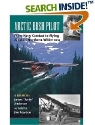
Arctic Bush Pilot
By Andy Anderson as told to Jim Rearden
During the 1950s, when Doc Gaede was stationed in Tanana, Andy Anderson, was a bush pilot at Beetles Field, Alaska. Andy worked for Wien Airlines, carried mail, delivered miners to their claims, and dropped off hunters. He was dedicated to caring for all people along the Koyukuk, Atlanta, and other rivers; oftentimes he risked his life to get the medical treatment they needed — which meant flying them to the Public Health hospital in Tanana. Not only will you experience the close-calls of Andy's bush flying, but you'll appreciate his sense of humility and kindness as he gave generously of himself during an era when bush flying was a critical lifeline.
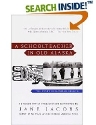
A Schoolteacher in Old Alaska: The Story of Hannah Breece
By Jane Jacobs, Vintage Books/Random House
When Hannah Breece came to Alaska in 1904, it was a remote, lawless, wilderness of gold prospectors, murderous bootleggers, tribal chiefs, and Russian priests. She spent fourteen years educating Athabascans, Aleuts, Inuits, and Russians with the stubborn generosity of a born teacher and the determination of an independent spirit.
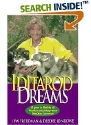
Iditarod Dreams: A year in the life of Alaskan sled dog racer DeeDee Jonrowe
by Lee Freedman and Deedee Jonrowe
If you love dogs, this book is for you! If you delight in watching the human spirit desire and accept a challenge, this book is for you. DeeDee Jonrowe is one of the best known mushers in Alaska. She is a consistent top ten Iditarod finisher. Her inspiring story is one of determination, hard work, commitment, physical strength, hope, and adventure. This book confirms that huskies were made to run, as much as Golden Retrievers were designed to retrieve and German Shepherds to herd. This book, and other books about the Iditarod, is a testimony of the lead dog's uncanny and astonishing ability to sense and scent the trail. Every chapter illustrates the love and care of the dog musher for his and her dogs through careful placement of the dog in a position that is suitable to its abilities, diligence in the dog's physical well-being, and knowledge of its uniqueness.
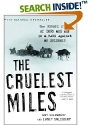
The Cruelest Miles: The Heroic Story of Dogs and Men in a Race Against an Epidemic
by Gay Salisbury and Laney Salisbury
When a deadly diphtheria epidemic swept through Nome, Alaska, in the winter of 1925, the local doctor knew that without a fresh batch of antitoxin, his patients would die. The only mode to obtain this lifesaving drug was by dogsled. The heroic dash of dog teams across the Alaska wilderness inspired the annual Iditarod Trail Sled Dog Race.

8.6 The Great Alaska Earthquake: March 27, 1964
By Stan Cohen, Pictorial History Publications, CO
Alaska holds title to the most seismic of all U.S. states — and has 11 percent of the world's earthquakes. This pictorial history records the devastation of the "Good Friday" in Alaska, as well as providing geological explanations and specific geographical effects.
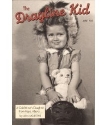
The Dragline Kid: A Gold-Miner's Daughter from Hope, Alaska Finds Adventure in Kenai, Alaska, but Hits Pay-Dirt Outside
By Lisa Augustine, Hardscratch Press
The second half of this feisty and humorous book takes place in Kenai, Alaska, beginning in 1948. Many of the early homesteaders, businesses, and activities the author describes were familiar to Doc Gaede when he arrived in the nearby town of Soldotna 1961. Subsequently, this information provides the reader with a broader backdrop of the cultural, history, and environment of chapters 19-24 in Prescription for Adventure: Bush Pilot Doctor.
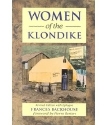
Women of the Klondike
By Frances Backhouse, Whitecap
Written from diaries, letters, memoirs, newspaper accounts, and archival photographs, this lively works explores the critical roles women played during the gold rush as entrepreneurs, miners, teachers, doctors, nurses, and journalists.

Alaska Earthquake 1964 - Where were You?
Compiled by Joy Griffin and the Homer Public Library (907.235.3180)
The one thing that shook them apart, brings them back together to tell their true stories 32 years later.
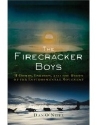
The Firecracker Boys
by Dan O'Neill
On July 14, 1958, "Father of the H-Bomb" Edward Teller arrived in Alaska to unveil Project Chariot, a plan to carve a new harbor out of the Alaska coastline at Point Hope by detonating up to six thermonuclear bombs. Teller and other members of the Atomic Energy Commission (AEC) propagandized to the Native people, and other Alaskans, that little effect would take place on their physical health, wildlife, environment, or subsistence lifestyle. This is a captivating and disturbing documentary of projects both intended and carried out by the AEC.
Point Hope is the the village of Mishal Gaede's biological family. Her grandfather, Andrew Tooyak, Sr., is featured in one of the centerfold pictures. The story of Mishal's adoption into the Gaede family can be found in Prescription for Adventure: Bush Pilot Doctor. Amos Lane is in the same picture. Elmer Gaede visited his home in Point Hope when his son, Leonard Lane, took him polar hunting. This story can be read in Prescription for Adventure: Bush Pilot Doctor.

Halfway to Heaven: My White-knuckled--and Knuckleheaded--Quest for the Rocky Mountain High
By Mark Obmascik
Mark Obmascik's account of his quest to climb all of Colorado's 14,000-foot peaks.

Colorado 14er Disasters: Victims of the Game
By Mark Scott-Nash
This book explores this dark side of climbing. When an accident happens on a 14er, the victim is far from help and in an environment where rescue is difficult at best. The book is full of hair-raising stories of these disasters and rescue attempts and also aids in avoiding such disasters.

Into Thin Air: A Personal Account of the Mt. Everest Disaster
By John Krakauer
Krakauer's epic account of the May 1996 disaster on the summit of Mt. Everest.

The Girls of Atomic City: The Untold Story of the Women Who Helped Win World War II
By Denise Kienan
Talk about adventure! These girls had no idea they were part of an adventure. They did not know they were making the world's first nuclear until a bomb detonated above Hiroshima. What were they thinking? How did they stay on their job with no information about what they were working on? How were the secrets in this compound contained? Sometimes we can stumble into adventure and not even know it's happening to us.

Lost in Shangri-La: A True Story of Survival, Adventure, and the Most Incredible Rescue Mission of World War II
By Mitchell Zuckoff
For most of my life, I've read about the Western Front of WWII in Europe. The past several years I've sought out accounts of battles in other parts of the world. This book introduced me to a startling mission in the South Pacific, which included both men and a woman; and to a previous-to-that-time, unknown society. A plane crash, language barriers, culture, survival, and climate all added to my amazement.

We Band of Angels: The Untold Story of the American Women Trapped on Bataan
By Elizabeth Norman
This was an account of WWII in the Philippines. What had been a tropical paradise, turned into a horrifying nightmare. Nurses set up field hospitals in jungles and tunnels. There they tended to devastating injuries of war, while experiencing the terrors of shells and shrapnel. As if that wasn't terrifying enough, they were taken to internment camps where they endured three years of brutality and starvation.